
If you commute five days a week, you probably already know how much public transport costs you each month.
Depending on where you live, a monthly pass can easily be €40, €60, €80 or more. And that is before the occasional extra ticket, taxi home after missing the last connection, or the coffee you buy while waiting for a delayed train.
Over a year, those small costs add up.
So, is an electric scooter actually cheaper?
In many cases, yes. But the real comparison is not just the price of a monthly travel pass versus the price of a scooter. You also need to look at charging, maintenance, travel time and how often you actually use it.
Let's break it down.
Monthly Pass vs One-Time Purchase
The biggest difference is fairly simple.
With public transport, you keep paying every month. An e-scooter is different: most of the cost comes at the beginning, followed by relatively low running costs.
Take the KuKirin G2 as an example. At €489, it costs more upfront than a single monthly travel pass. But if your current pass costs around €60 per month, the maths starts to look interesting.
€489 ÷ €60 = about 8 months.
That does not mean every rider will completely "break even" after eight months. You still have electricity, maintenance, insurance or other costs to consider depending on where you live. But it gives you a useful starting point when working out the cost of e-scooter commuting.
And the more regularly you ride, the more noticeable the difference can become.

Charging Costs Are Surprisingly Low
One of the nice things about electric scooters is that charging usually does not add much to your monthly budget.
The exact cost depends on the battery capacity and your local electricity price, but a full charge generally costs far less than filling a car with fuel.
If you ride to work during the week and charge at home, your monthly electricity cost can remain fairly small.
That is where electric scooter running costs become attractive. You are not paying for every journey individually, and you are not paying a fixed monthly transport fee either.
Of course, electricity is not the only running cost. Tyres, brake components and other wear parts eventually need attention. Looking after the scooter properly is important if you want it to remain reliable over the long term.
Your Time Has Value Too
There is another part of the calculation that is easy to overlook: time.
A public transport journey is rarely just the time spent sitting on a bus or train.
You might walk to the station, wait for the next service, change lines, wait again and then walk from the final stop to work.
On a good day, that might not be a problem. On a bad day, a short journey can turn into a frustrating one.
With an e-scooter, your journey can be more direct. You leave when you are ready, follow your route and arrive without having to plan your journey around a timetable.
For shorter city commutes, that flexibility can be just as valuable as the money you save.
And there is something else: you do not have to spend your morning wondering whether the next bus is going to show up.
But an E-Scooter Isn't the Right Choice for Everyone
This is where the comparison needs to stay realistic.
An electric scooter can make a lot of sense for commuting, but it is not automatically the best option for every journey.
Weather is one factor. Riding in heavy rain, strong wind or freezing temperatures is obviously less appealing than stepping onto a warm train.
Storage matters too. You need somewhere secure to leave the scooter at home and, ideally, at work. A good lock is also essential.
Maintenance is part of ownership. Tyres wear out, brakes need checking and batteries do not last forever. These costs are generally manageable, but they should still be included when calculating your long-term monthly commute cost.
And finally, there are local regulations.
E-scooter laws are not identical across Europe. Rules covering speed, where you can ride, equipment requirements, registration and insurance can vary considerably between countries and even local authorities.
Before buying, check the rules that apply to your area and your regular route.
Where KuKirin Fits In
If you have worked out that an e-scooter could make sense for your commute, the next question is choosing one that fits the way you actually ride.
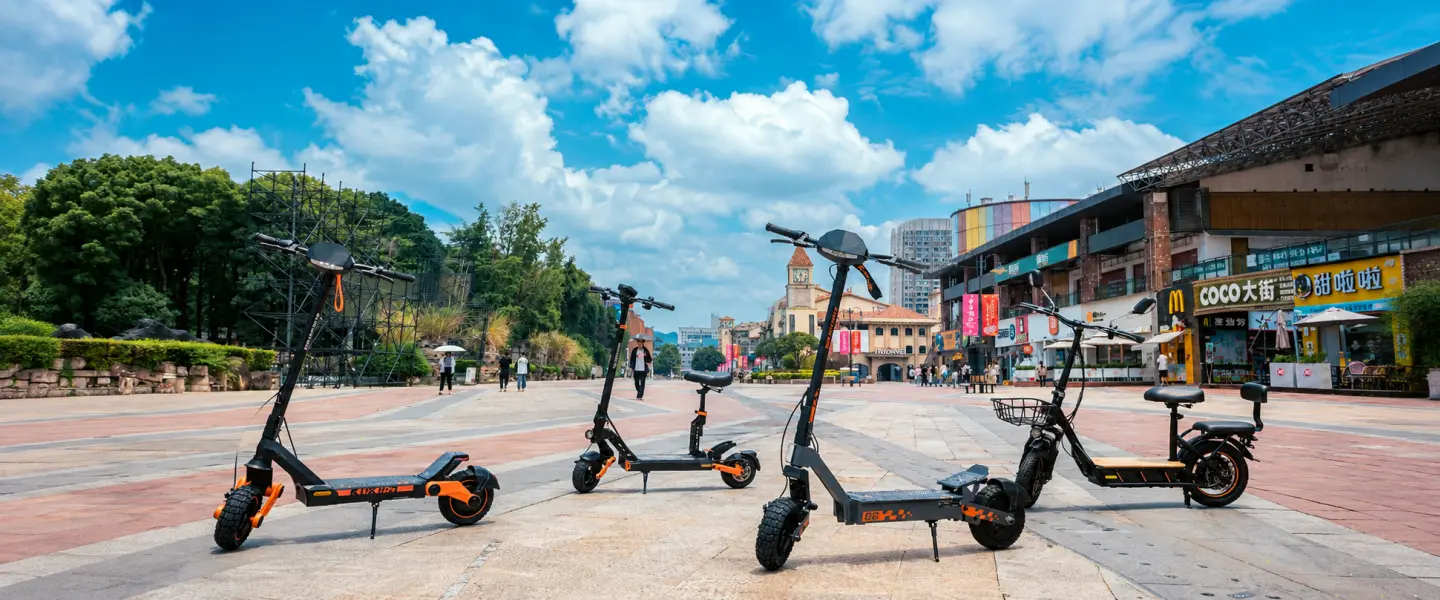
KuKirin has models aimed at different types of riders and journeys.
The KuKirin G2 is a practical option for everyday riding, especially if you are looking for something relatively affordable for regular city trips.
If your commute is longer or you simply do not want to charge as often, the KuKirin G2 Max offers more range and is better suited to riders who regularly cover greater distances.
The important thing is not to choose based on the biggest number on a specification sheet. Think about your actual journey.
How far do you travel each day?
Do you have hills on your route?
Can you charge at home?
Where will you park it?
And how often will you realistically ride?
Those answers will tell you much more about whether a particular scooter is right for you.
So, Is an Electric Scooter Worth It?
There is no single answer for everyone.
If you live close to a reliable, affordable public transport network and only travel occasionally, sticking with public transport may make perfect sense.
But if you commute regularly, travel relatively short distances and find yourself paying for a monthly pass that you do not always use, an e-scooter is worth looking at.
The best way to decide is to do your own calculation.
Take your current monthly transport cost and multiply it by 12.
Then compare that figure with the purchase price of a scooter, estimated charging costs and a realistic allowance for maintenance.
You can also put a value on the time you spend waiting for buses and trains.
That gives you a much clearer picture of whether an electric scooter is worth it for your lifestyle.
For some commuters, the biggest saving will be money.
For others, it will be time.
And for many, it will simply be having the freedom to leave home, get on the scooter and head wherever they need to go without checking the timetable first.
That's the real advantage of switching from public transport to an e-scooter: you are not just changing how you travel. You are changing how much control you have over your everyday commute.
Sunny