
Every commute has a moment where it falls apart. For a lot of people in European cities, that moment is the last mile: the gap between the train and the front door. An e-scooter fills that gap. A foldable one changes where you can take it, and that matters more than top speed.
Most scooters can cover the distance. What separates a foldable e-scooter from a fixed one is permission: where you are allowed to bring it.
Three Things Folding Actually Changes
First, storage. A folding scooter goes under a desk, into a locker or behind the door at home. A fixed one takes up floor space, and in smaller flats that space often does not exist. If you cannot leave it where you arrive, you cannot really commute with it.
Second, other transport. Trains and buses are more likely to accept a scooter that folds compact than a full-size one standing in the aisle. That is the difference between scooter-plus-train as an option and as a constant negotiation.
Third, the car. Being able to put it in the boot means it stops being a commuter-only purchase. It becomes the thing you throw in for a weekend or a ride somewhere you would never ride to from home.
None of this requires a spec sheet: just an honest look at your actual day.
The Catch Nobody Mentions
Folding adds weight and a moving joint. The hinge wears first, and a scooter that rattles when you pick it up has stopped being convenient: it is a chore.
So before you buy, ask yourself whether you will actually fold it. If the answer is every day, pay for a quality folding system: reinforced hinges, a secondary lock, a fold that clicks into place instead of wobbling. If the answer is almost never, you are carrying extra weight for nothing; a non-folding scooter with more range might serve you better.

What the First Week Is Really Like
Nobody is smooth with a folding scooter on day one; you get quick within a week. Two small habits help: always switch the motor off before folding, and always check the latch has clicked home before you lift it. It sounds obvious, and it is why most scooters get dropped.
Worth doing once a month: wipe the hinge area, check the latch, add a drop of lubricant where the manual points. Hinges need little, but they need something.
Small Transit Tricks for a Smoother Commute
Combining a folding e-scooter with trains and buses only works if the operator lets you. Confirm the scooter is allowed and that its folded size fits their rules. If you can, travel at times when carrying it will not bother anyone. Use bike-friendly routes for the first and last mile. Never block entryways or exits; that is the fastest way to get scooters banned. And plan around stations with no lift when you can.
A basic anti-theft lock is worth having too. KuKirin also offers an anti-theft lock accessory for extra protection when you park in busier areas.

One Example Worth Looking At
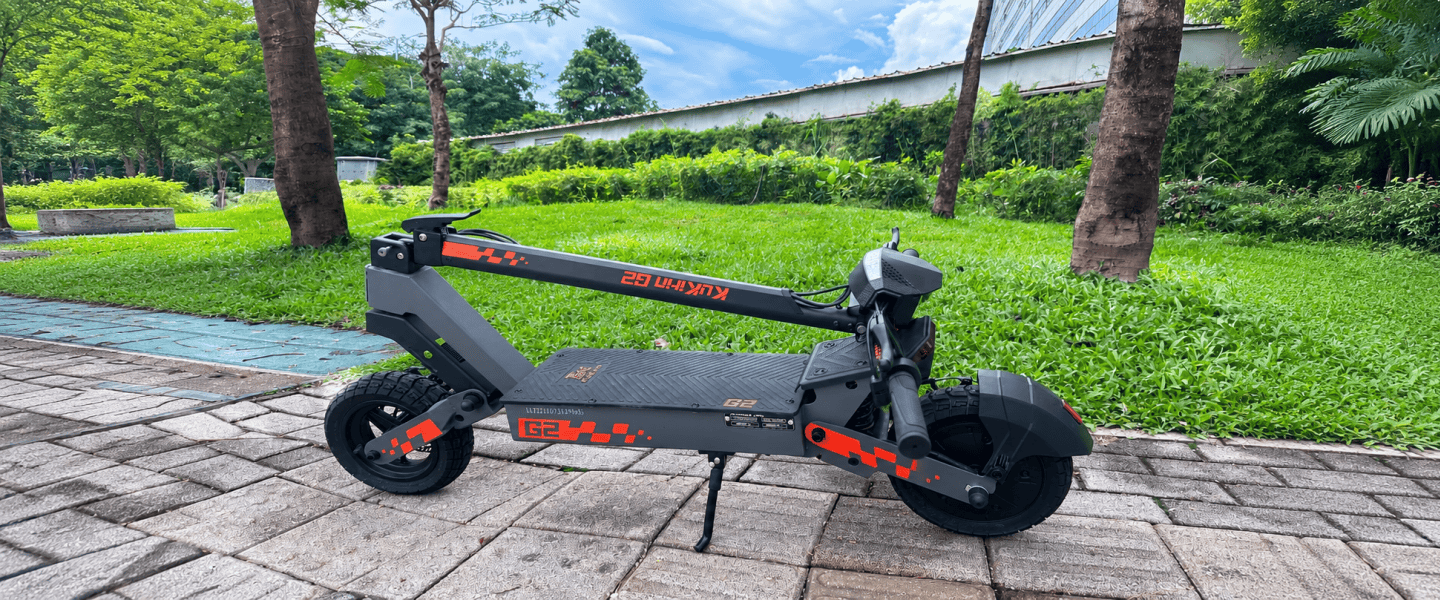
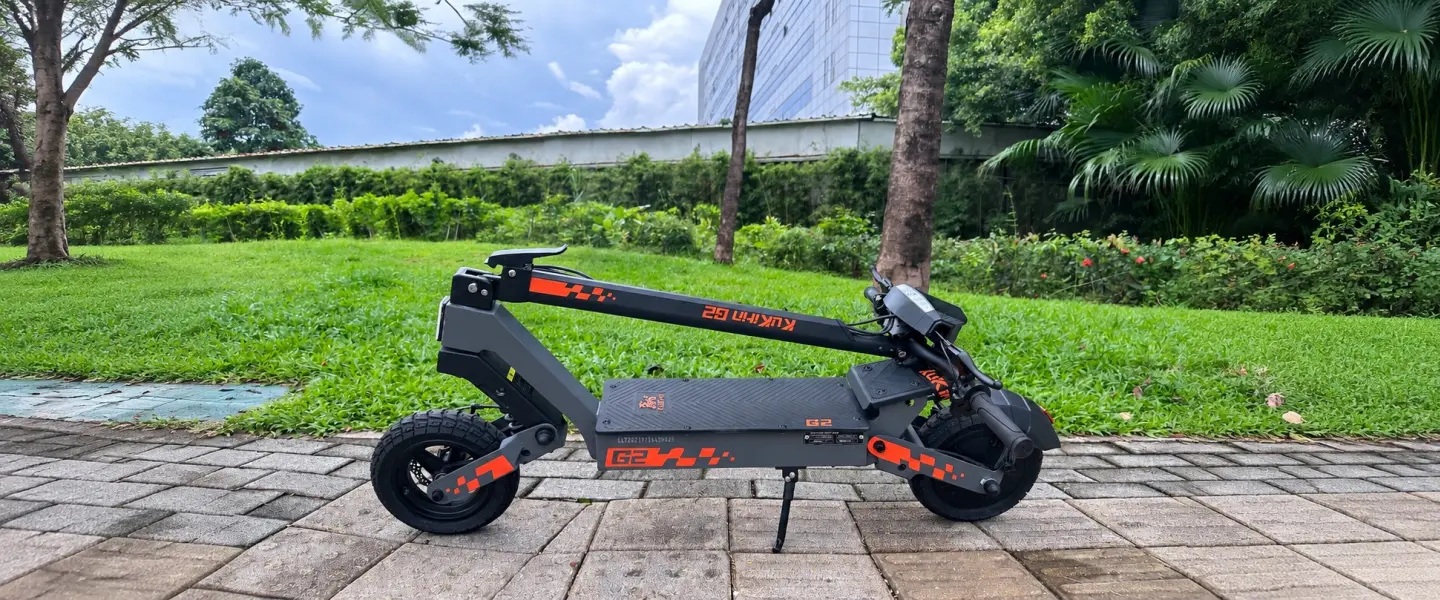
If folding is part of your plan, the KuKirin G2 is a reasonable place to start. It pairs an 800W motor with a 48V 15Ah battery, a realistic 55 km range and 45 km/h top speed, and folds to 1258×660×540 mm at 23.5 kg, compact enough for trains without feeling like a toy. If you rarely fold and want more range, the G2 Max is the alternative.
Orders from the KuKirin EU store are tax-free with free shipping, covered by after-sales warranty, and EU deliveries generally arrive within 4 to 7 business days after dispatch. If you are weighing up a foldable scooter, measure your boot and your locker, then decide if folding fits the day you have, not the one you imagine.
Sunny